

A leading redistributor company was facing challenges in managing inventory across a vast and complex distribution network. This detailed case study describes, How Optinn helped a distributor that manages extensive inventory across a vast network improve their replenishment planning process. By implementing Blue Yonder linear programming optimization engine, they streamlined operations, reduced costs, and increased efficiency.
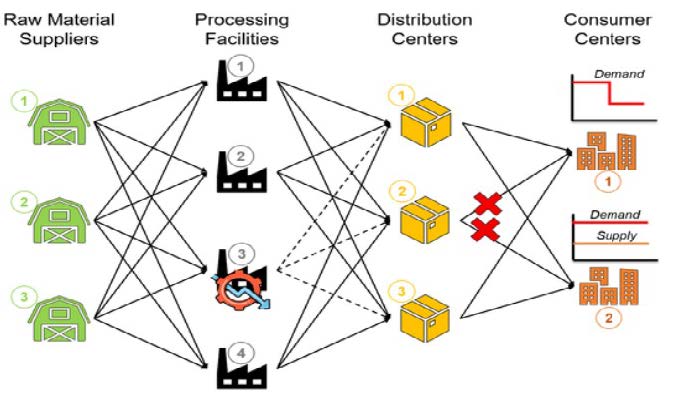
Project Goals
- Ensure a more consistent and data-driven approach to allocating inventory to customer orders.
- Allocation of supply based on Demand fair share
- Automate replenishment planning to free up employees’ time, reducing labor costs by hundreds of thousands of dollars annually.
- Reduce inventory carrying costs by improving stock alignment with customer demand, leading to better cash flow and reduced excess inventory.
Project Background
The redistributor managed hundreds of thousands of SKUs across nearly 20 distribution centers in the US and Canada. Frequent order releases, short lead times, and 24×7 operations added complexity to daily planning. The existing process relied heavily on ERP custom code and manual intervention, leading to inefficiencies and missed opportunities for optimization.
Our Solution
Using Blueyonder ESP linear programming (LP) optimization engine that balanced constraints, priorities, and objectives to create near-optimal replenishment plans. The system ingested real-time data( Running planning cycle every 20mins) which picks the latest customer orders, forecasts, inventory and in-transit data along with sourcing rules to recommend allocations and transfers.
- Data Ingestion – Capturing orders, inventory, forecasts, and sourcing rules.
- Demand Prioritization – Applying business rules for customer priority and hard allocations.
- Optimization & Matching – LP engine aligning demand with available supply and inbound flows.
- Continuous Execution – Running multiple times a day for real-time responsiveness.
Data Ingestion: Ingest customer orders, forecast, inventory, scheduled receipts, POs, sourcing network, and other data sources. - Demand Prioritization: Prioritize orders by business rules (hard allocations, customer priority, adherence to forecast, past order cuts).
- Optimization & Inventory Matching: LP engine allocates inventory, inbound, and POs; suggests transfer orders when needed.
- Post-Optimization & Continuous Execution: Assign reason codes for cuts; run optimization multiple times per day for continuous fulfillment.
Key Challenges and Solutions
Addressing Circularity Issues
In a distribution or redistribution network, Network circularity in a common challenge, which is, A DC supplies to B, and B DC can supply back to A as well based on the scenarios, which creates loops that disrupted automation. Any enterprise software faces the challenge in solving such kind of network circularity
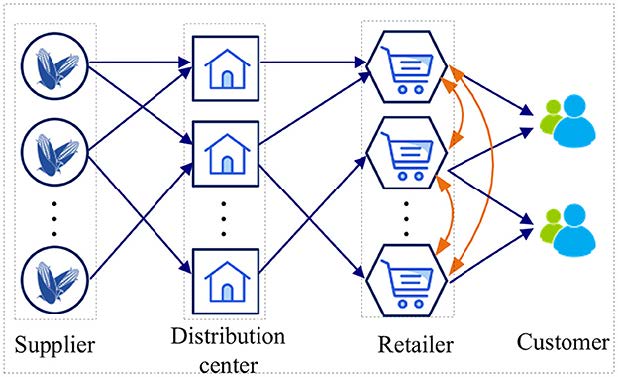
By introducing virtual locations(Keeping modeling changes to minimal) and weighted preferences to minimize circular conflicts.
Optimizing Demand-Supply Matching
Implemented multiple tiers of demand classification; solver optimized match across the network accounting for inventory, transport costs, and demand.
Achieving Order-Level Transfer Visibility
Maintained order-level visibility for transfers, including cross-docking cases to reduce delays and ensure timely deliveries.
Near Real-Time Optimization and Execution
Needed plans within 30mins of cutoff time; with multiple runs per day across time zones (vs traditional overnight batch).
Planning Optimization Process
Designed like a serverless function: company sends data; system returns optimized plan in about an hour for ERP/WMS execution.
Project Duration and Impact
End-to-end project took ~26 weeks, enabling a more agile, efficient replenishment process.
Conclusion
This case study demonstrates how Optinn Solutions helped a redistributor unlock value through technology-driven, data-first replenishment planning. By combining optimization techniques with deep supply chain expertise, we delivered measurable improvements in efficiency, agility, and customer satisfaction.